In many industrial environments, controlling hazardous energy is one of the most important steps for workplace safety. As various machines rely on electrical, mechanical, hydraulic, or pneumatic energy, workers need a reliable method to prevent accidental startup during maintenance. This is where Lockout Tagout (LOTO) becomes essential. To strengthen these procedures, cable lockouts provide additional flexibility and coverage that traditional devices may not offer. By understanding how cable lockouts improve LOTO safety, companies can better protect their teams and reduce operational risks.
To begin with, cable lockouts are designed as flexible Lockout Tagout devices used to isolate more than one energy source at a time. They typically consist of a strong steel or nylon cable connected to a lockable body. Because the cable can be threaded through various points, this device adapts easily to different equipment shapes and sizes. Compared with fixed lockouts, cable lockouts offer wider compatibility, which helps ensure that more equipment can be safely secured during downtime.
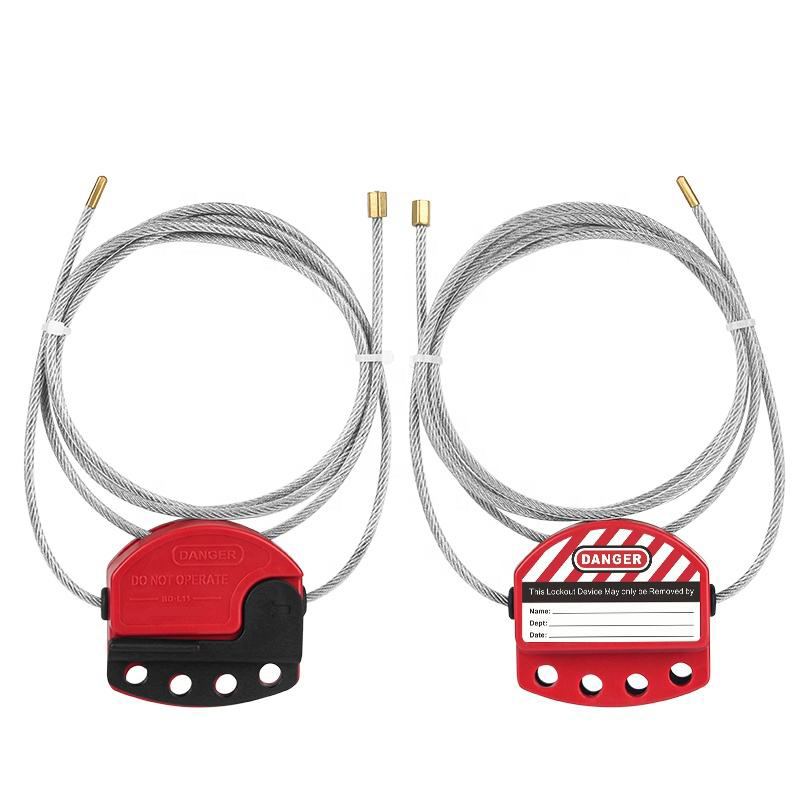
As workplaces continue to adopt more complex machinery, isolation points are often spread across several locations. This makes multi-point isolation a challenge. However, cable lockouts improve LOTO safety by allowing workers to secure all necessary points using a single device. By threading the cable through valves, switches, or handles, users ensure that no isolation point is left unprotected. This reduces the chance of missed lockout steps, which is a common cause of LOTO failures.
In addition, many facilities rely on equipment that does not fit standard lockout devices. Large valve handles, oversized switches, and multiple breaker panels are examples where traditional devices may not be suitable. Cable lockouts solve this problem because the cable adjusts to different shapes without losing strength. This flexibility increases LOTO safety coverage and minimizes unsafe improvisation, ensuring consistent application across all equipment types.
Another important advantage of cable lockouts is improved visibility. Many cable lockouts are brightly colored, making them easy to notice even in busy environments. When workers see a lockout device clearly in place, they are less likely to accidentally operate the equipment. In addition, because the cable holds multiple parts securely, unauthorized re-energization becomes more difficult. When combined with safety padlocks and LOTO tags, cable lockouts create a clear visual warning that maintenance is in progress.
When maintenance requires multiple workers, group lockout becomes necessary. In such cases, cable lockouts support coordination by allowing several padlocks to be applied to one device. Each worker can attach their own lock, ensuring that equipment remains locked until every team member completes their task. This strengthens communication and prevents accidental startup when different teams are working at the same time.
Moreover, cable lockouts are built to withstand tough industrial conditions. Steel cables offer strong resistance to cutting and wear, while nylon cables provide non-conductive safety for electrical tasks. Their durability ensures that the devices remain secure even in high-temperature, humid, or dusty environments. A reliable lockout device contributes directly to safer LOTO procedures because it prevents accidental release due to equipment failure.
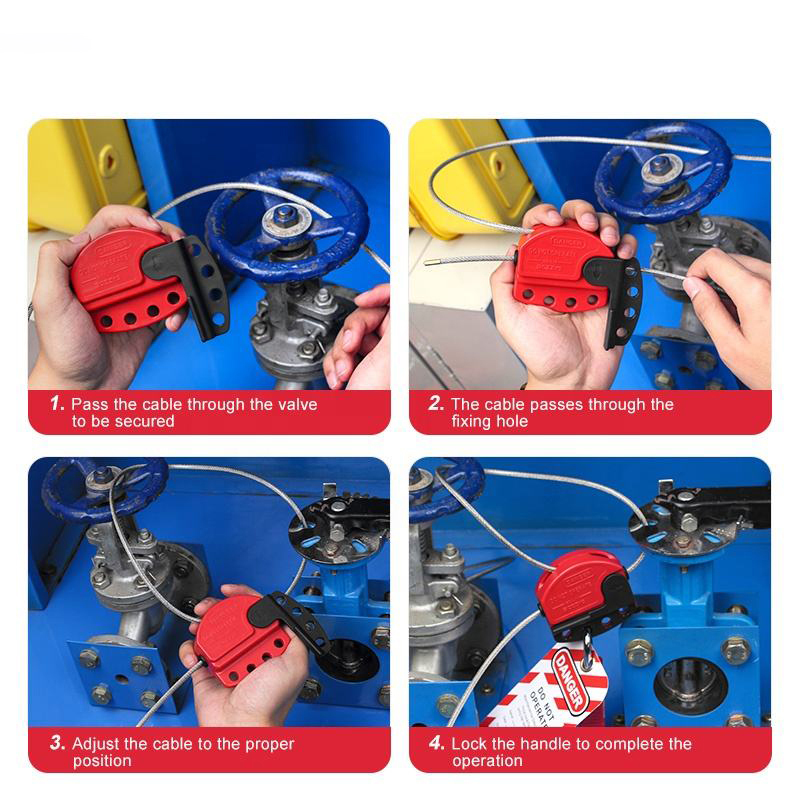
To maximize the benefits of cable lockouts, companies should follow a few important best practices. First, choosing the right cable length and material ensures the device fits its intended application. Next, workers should inspect cables, lock bodies, and padlocks regularly to check for damage. Training is equally important, as employees must understand how to install and remove cable lockouts correctly. Finally, integrating cable lockouts into the company’s written LOTO program helps ensure consistent use across all departments.
Because of their flexibility, cable lockouts are widely used across many industries. Manufacturing facilities use them to secure conveyor systems, assembly lines, and multi-point machinery. Chemical and petrochemical plants rely on cable lockouts for securing large valves. Power generation plants often use cable lockouts for electrical panels with several breakers. Even construction sites use these devices to lock out different energy sources on mobile machines. In all these environments, cable lockouts help improve LOTO safety by providing reliable and adaptable energy isolation.
Overall, cable lockouts play an important role in improving LOTO safety by offering flexibility, multi-point isolation, and strong durability. Their ability to secure irregular equipment and support team lockout makes them an essential part of modern Lockout Tagout programs. By using cable lockouts correctly and integrating them into daily safety practices, companies can better protect their workers and maintain compliance with industry standards.
If you are looking for durable, easy-to-use, and compliant lockout tagout solutions—including cable lockouts—ELECPOPULAR SAFETY provides a full range of professionally designed LOTO products to help you create a safer working environment.




COPYRIGHT© 2024 Elecpopular Safety Products Co., Ltd. All rights reserved.
Designed by 


