Lockout Tagout (LOTO) procedures play a critical role in industrial safety. During equipment maintenance, repair, cleaning, or inspection, hazardous energy must be properly isolated to prevent accidental machine startup or energy release. One of the most important components in this process is the safety padlock.
A properly selected safety padlock helps protect workers, improve OSHA compliance, and support effective hazardous energy control. However, not all lockout padlocks are the same. Different industrial environments require different materials, shackle types, key systems, and durability levels.
This guide explains how to choose the right safety padlock for your Lockout Tagout program and how proper padlock selection can improve workplace safety and operational efficiency.
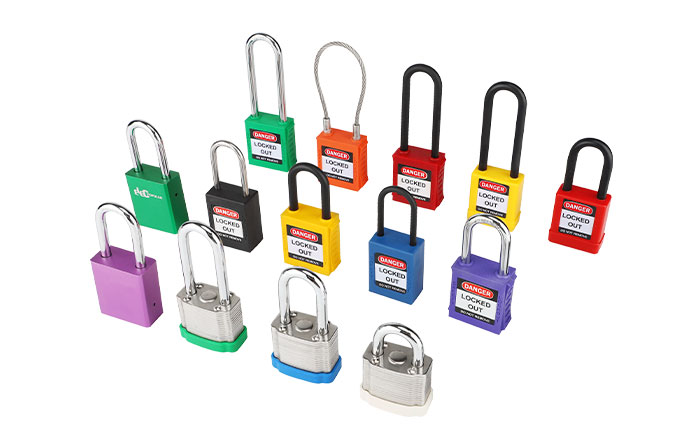
A safety padlock is a lock specifically designed for Lockout Tagout applications. Unlike ordinary security padlocks, safety padlocks are manufactured for hazardous energy isolation and employee protection.
LOTO safety padlocks are commonly used to secure:
Circuit breakers
Valves
Electrical panels
Pneumatic systems
Hydraulic equipment
Mechanical isolation points
Typical features of a safety padlock include:
High-visibility colors
Durable industrial materials
Unique key systems
Key retention functions
Corrosion resistance
Employee identification labels
Many safety padlocks are also designed to comply with OSHA Lockout Tagout requirements for hazardous energy control.
Choosing the correct safety padlock is more important than many facilities realize. An unsuitable padlock may fail in harsh environments, create electrical hazards, or complicate lock management procedures.
Proper padlock selection helps:
Prevent unauthorized equipment startup
Improve employee accountability
Reduce workplace accidents
Support OSHA compliance
Simplify maintenance procedures
Improve group lockout efficiency
In industrial facilities where multiple maintenance teams work simultaneously, a standardized safety padlock system is essential for maintaining safe operations.
Selecting the right safety padlock is essential for building an effective Lockout Tagout (LOTO) program. Different industrial environments require different materials, locking systems, and durability levels. Before choosing a padlock, facilities should evaluate the application environment, energy source, maintenance procedures, and compliance requirements.
Factor | Options | Best For |
Body Material | Nylon / Aluminum / Stainless Steel / Brass | Different industrial environments |
Shackle Type | Steel / Nylon / Aluminum / Cable | Electrical or heavy-duty applications |
Key System | Keyed Different / Keyed Alike / Master Key | Different lock management needs |
Environmental Resistance | Corrosion-resistant / Weatherproof / Chemical-resistant | Outdoor and harsh environments |
Identification | Colors / Labels / Engraving | Employee accountability and organization |
This comparison table provides a quick overview of the most important considerations when selecting a LOTO safety padlock.
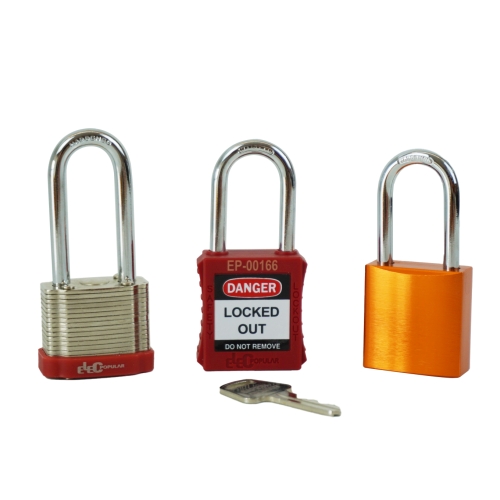
The body material affects durability, corrosion resistance, electrical safety, and overall suitability for different working environments.
Material | Advantages | Recommended Applications |
Nylon | Non-conductive, lightweight, corrosion-resistant | Electrical lockout applications |
Aluminum | Durable, lightweight, corrosion-resistant | Manufacturing and outdoor environments |
Stainless Steel | Excellent corrosion resistance, long service life | Marine and chemical industries |
Brass | Reliable, economical, smooth operation | General industrial use |
Nylon Safety Padlocks
Nylon safety padlocks are widely used in electrical maintenance because they are non-conductive and non-sparking. They are commonly used for circuit breaker lockout and electrical panel isolation.
Aluminum Safety Padlocks
Aluminum padlocks provide a strong balance between durability and lightweight construction. They are suitable for both indoor and outdoor industrial applications.
Stainless Steel Safety Padlocks
Stainless steel padlocks are ideal for harsh environments where moisture, chemicals, or saltwater exposure may cause corrosion.
Brass Safety Padlocks
Brass padlocks are commonly used in standard industrial environments that require reliable performance and cost-effective lockout solutions.
The shackle type determines the padlock’s physical strength, flexibility, and compatibility with different lockout points.
Shackle Type | Features | Best Applications |
Steel Shackle | High strength and durability | Heavy industrial equipment |
Nylon Shackle | Fully non-conductive and non-sparking | Electrical maintenance |
Aluminum Shackle | Lightweight and corrosion-resistant | Outdoor applications |
Cable Shackle | Flexible locking capability | Complex machinery and large valves |
Steel Shackles
Steel shackles provide excellent durability and are commonly used in heavy-duty industrial maintenance environments.
Nylon Shackles
Nylon shackles are designed for electrical lockout procedures where non-conductive protection is required.
Cable Shackles
Cable shackles are useful for irregular lockout points or applications requiring flexible installation.
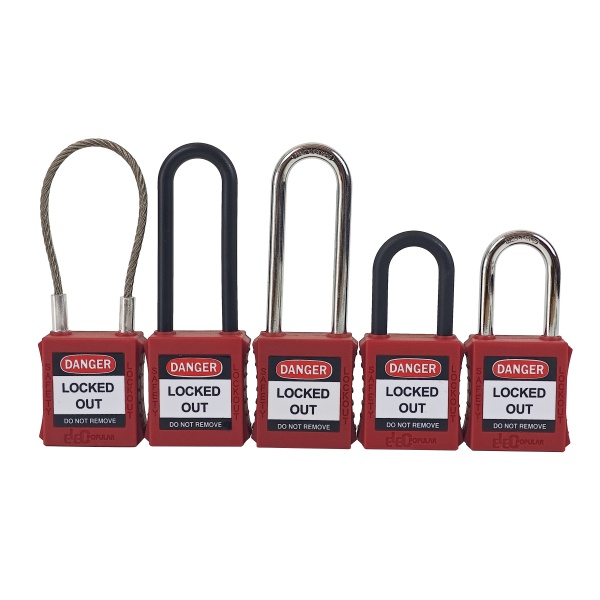
Long shackles are suitable for large valve handles, multiple lockout points, or oversized equipment.
Short shackles provide more compact and secure locking in limited spaces.
Selecting the correct shackle size improves both lock compatibility and workplace safety.
Key management is one of the most important parts of an effective Lockout Tagout system. Different facilities require different keying systems depending on operational complexity and safety procedures.
Key System | Description | Advantages | Typical Use |
Keyed Different (KD) | Each lock has its own unique key | Maximum employee accountability | Standard LOTO programs |
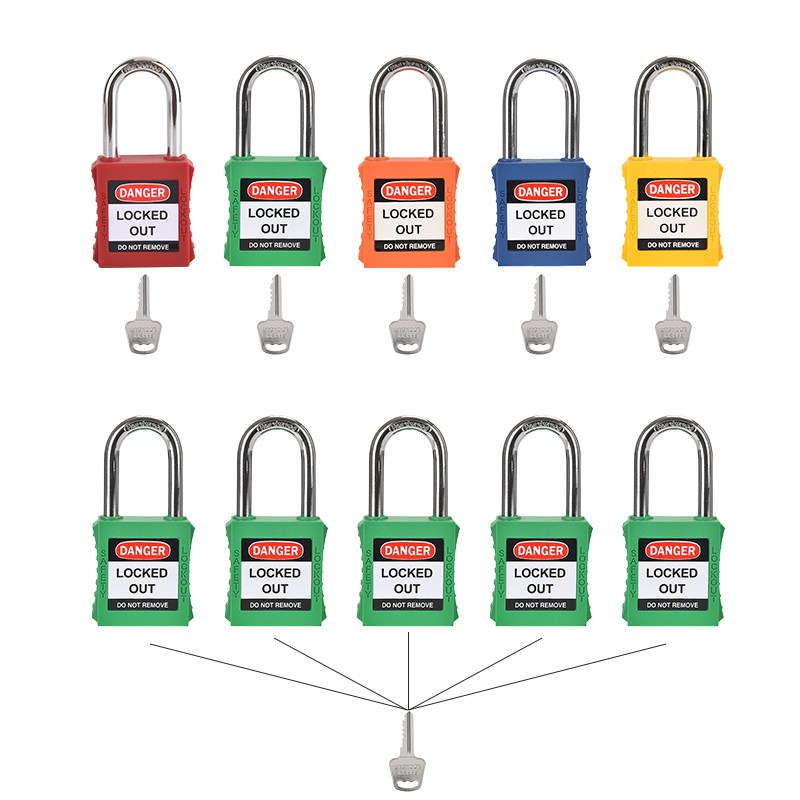
Keyed Alike (KA) | Multiple locks operate with the same key | Simplified key management | Departmental systems |
Master Key (MK) | Supervisor can open multiple locks | Easier emergency management | Large factories |
Grand Master Key | One key controls multiple groups | Enterprise-level management | Multi-site organizations |
Keyed Different Systems
Keyed different systems are widely recommended because each employee maintains exclusive control of their own lock.
Keyed Alike Systems
Keyed alike systems reduce the number of keys required, making them useful for specific maintenance teams or departmental operations.
Master Key Systems
Master key systems help simplify lock administration in large industrial facilities while still maintaining controlled access.
Best Practice Tip
For most industrial Lockout Tagout programs, keyed different safety padlocks provide the highest level of worker protection and accountability.
Environmental conditions directly affect padlock performance and service life. Choosing the wrong material may lead to corrosion, lock failure, or reduced safety performance.
Environment | Recommended Padlock Type |
Electrical Maintenance | Nylon Safety Padlock |
Outdoor Facilities | Aluminum Safety Padlock |
Marine Industry | Stainless Steel Safety Padlock |
Chemical Plants | Corrosion-Resistant Stainless Steel Padlock |
High-Humidity Areas | Weather-Resistant Safety Padlock |
Industrial facilities often expose lockout devices to:
Moisture
Chemicals
UV exposure
Saltwater
High temperatures
Dust and debris
Selecting the correct padlock material helps improve durability, reduce replacement costs, and maintain long-term safety performance.
Different industries face different hazardous energy risks, environmental conditions, and compliance requirements. Choosing the correct safety padlock for each application helps improve workplace safety, lock durability, and operational efficiency.
Industry | Recommended Padlock Type | Key Features Required | Typical Applications |
Manufacturing | Aluminum Safety Padlock | Durable, lightweight, corrosion-resistant | Production lines, conveyors, machinery maintenance |
Electrical Maintenance | Nylon Safety Padlock | Non-conductive, non-sparking | Circuit breakers, electrical panels, switchgear |
Oil & Gas | Stainless Steel Safety Padlock | Corrosion-resistant, weatherproof | Pipelines, drilling equipment, outdoor facilities |
Chemical Processing | Stainless Steel or Chemical-Resistant Padlock | Chemical resistance, long-term durability | Valves, reactors, processing systems |
Marine & Offshore | Marine-Grade Stainless Steel Padlock | Saltwater corrosion resistance | Offshore platforms, ship maintenance |
Power Generation | High-Security Safety Padlock | Durable, high accountability | Turbines, substations, control systems |
Food & Beverage | Aluminum or Stainless Steel Padlock | Corrosion resistance, easy cleaning | Packaging lines, processing equipment |
Mining Industry | Heavy-Duty Steel Shackle Padlock | High strength, dust resistance | Crushers, conveyors, heavy equipment |
Pharmaceutical Industry | Cleanroom-Compatible Safety Padlock | Corrosion-resistant, easy identification | Cleanrooms, laboratory equipment |
Construction Sites | Weather-Resistant Safety Padlock | Portable, rugged construction | Temporary power systems, mobile equipment |
Manufacturing Facilities
Manufacturing plants typically require durable and versatile safety padlocks for daily maintenance operations. Aluminum safety padlocks are commonly used because they provide a balance between strength, lightweight construction, and corrosion resistance.
Electrical Maintenance
Electrical maintenance environments require fully non-conductive lockout devices. Nylon safety padlocks with non-conductive shackles help reduce electrical hazards and improve worker protection during circuit isolation procedures.
Oil & Gas Industry
Oil and gas facilities often expose lockout devices to harsh weather, moisture, and corrosive substances. Stainless steel safety padlocks are widely used because of their durability and resistance to corrosion.
Chemical Processing Plants
Chemical plants require padlocks that can withstand exposure to aggressive chemicals, vapors, and high-humidity environments. Corrosion-resistant materials are critical for maintaining long-term lock reliability.
Marine & Offshore Applications
Marine environments present severe corrosion risks due to saltwater exposure. Marine-grade stainless steel safety padlocks help ensure reliable performance in offshore and coastal operations.
Power Generation Facilities
Power plants and substations require highly secure and durable lockout devices for critical electrical and mechanical systems. Key control and employee accountability are especially important in these environments.
OSHA 1910.147 establishes requirements for lockout devices used during hazardous energy control procedures.
Safety padlocks should be:
Durable
Standardized
Identifiable
Substantial enough for industrial use
In addition, lockout devices should be used exclusively for Lockout Tagout purposes and clearly identify the authorized employee applying the lock.
Facilities should also ensure that employees receive proper LOTO training and follow documented energy control procedures.
Choosing the right safety padlock is a critical part of a successful Lockout Tagout program.
The ideal safety padlock depends on:
Application environment
Energy source
Material requirements
Key management system
Industry safety standards
By selecting appropriate safety padlocks and implementing standardized lock management procedures, industrial facilities can improve OSHA compliance, reduce workplace accidents, and create safer working environments.
For companies developing or upgrading their LOTO programs, investing in high-quality safety padlocks is an important step toward long-term operational safety and efficiency.
EPSAFE provides comprehensive Lockout Tagout solutions for industrial facilities worldwide.
Our product range includes:
Nylon safety padlocks
Aluminum safety padlocks
Stainless steel safety padlocks
Smart NFC padlocks
Bluetooth safety padlocks
Lockout hasps
Valve lockouts
EPSAFE products are widely used in:
Manufacturing plants
Electrical maintenance
Oil & gas facilities
Chemical industries
Marine operations
Power generation systems
With reliable quality, industrial-grade durability, and customizable solutions, EPSAFE helps customers improve hazardous energy control and workplace safety management.




COPYRIGHT© 2024 Elecpopular Safety Products Co., Ltd. All rights reserved.
Designed by 


